Blog
News & insights
Company updates, regulatory intelligence insights, and product news from Cleo Labs.

Product Compliance2026-09-12
On 3 September, the EU Council signed off on its customs overhaul: a second, still-unpriced fee lands on every low-value parcel from 1 November, stacked on top of the €3 duty already in force since July
On 3 September 2026, the Council of the EU formally adopted its position on the recast Union Customs Code: a new Customs Authority in Lille, a shared Customs Data Hub, and an EU-wide handling fee on small parcels due by 1 November 2026. The fee stacks on top of the €3 flat duty in force since 1 July 2026, and the Commission has not yet set its price.
 Naomie Halioua
Product Compliance2026-09-11
On 2 September, Brazil's Anvisa suspended two Unilever production lines making OMO and Comfort: the trigger was gaps in the company's own water-monitoring and batch-release records, not a single contaminated unit
On 1 September 2026, Brazil's Anvisa signed Resolution RE No. 3,443/2026, published the next day, preventively suspending Unilever's liquid laundry soap (OMO, Brilhante, Surf) and fabric softener (Comfort, Fofo) lines at its Vinhedo, Sao Paulo plant. A joint inspection found gaps in manufacturing, water-monitoring and batch-release records, not contamination, so no recall was ordered and existing stock stays on sale.
Naomie Halioua
Product Compliance2026-09-10
Hong Kong flagged a banned dye in a Korean face cream on 24 July. By 6 September, Singapore's own batch tests showed the contamination sat with one unauthorized reseller, not the brand's official supply chain
On 24 July 2026, Hong Kong Customs found the banned dye Sudan Red in a Medicube face cream and a separate missing-Chinese-warning violation. Singapore's HSA then suspended all three local sellers of the same product, tested each one's own batches, and traced the contamination to one unauthorized parallel importer, clearing the brand's own distributor on 6 September 2026.
Naomie Halioua
Product Compliance2026-09-09
On 1 September, the EU proposed its first legal limit for the toxin behind a recall that reached at least 99 countries: the number for powdered infant formula is fixed, the number for liquid formula is a calculation every manufacturer has to run itself
On 1 September 2026, the European Commission published a draft regulation adding a maximum limit for cereulide, a heat-stable toxin behind a 2026 infant formula recall that WHO says reached at least 99 countries, to Regulation (EC) No 2073/2005: 1 microgram per kilogram in dried infant formula, with liquid formula checked against a manufacturer-calculated equivalent. Comments are open until 29 September 2026.
Naomie Halioua
Product Compliance2026-09-08
From 11 September, EU law forces manufacturers to report an exploited vulnerability in any connected product, smart toys and wearables included, within 24 hours: the duty already covers products sold years ago, 15 months before the same regulation's CE-marking deadline
From 11 September 2026, Article 14 of the Cyber Resilience Act requires manufacturers to report an actively exploited vulnerability in any connected product, from smart toys to wearables to routers, to a national CSIRT and ENISA within 24 hours. Article 69(3) of the regulation excludes this duty from the CRA's usual grace period for existing products, so it already covers items sold years before the deadline, 15 months ahead of the December 2027 date when CE marking becomes mandatory. For non-EU brands, the CSIRT to notify depends on which authorised representative, importer or distributor handles the highest volume of a given product.
Naomie Halioua
Product Compliance2026-09-07
On 2 September, US Customs proposed a 64-question rulemaking that would replace a decades-old product identifier and let CBP demand the export paperwork your own supplier files with its home customs authority
On 2 September 2026, US Customs and Border Protection published an Advance Notice of Proposed Rulemaking asking 64 questions about requiring importers to identify every party in a supply chain, retain the export documents their foreign suppliers file with their own customs authorities, and replace the decades-old Manufacturer or Shipper Identification Code with a more detailed global business identifier. Comments close 1 December 2026. It carries no legal force yet, but it reads like a blueprint for the product and party data every importer will eventually need to produce.
Naomie HaliouaProduct Compliance2026-09-06
From 27 September, EU law bans unproven green claims and uncertified sustainability labels on every physical product: the text sets no exception for stock already printed and shelved, and 20 of 27 member states have not finished writing it into their own law
From 27 September 2026, Directive (EU) 2024/825 bans a set of green-claim and sustainability-label practices outright across the EU, including unproven terms like 'eco-friendly' and labels not built on a real certification scheme or a public authority. Neither the directive nor its Implementing Regulation (EU) 2025/1960 addresses stock already printed and on shelves before that date, so in June 2026 EU enforcement authorities published a non-binding Common Understanding proposing sticker-based fixes instead. Only 7 of 27 member states met the 27 March 2026 transposition deadline; the Commission opened infringement proceedings against the other 20 on 28 May 2026, though the 27 September application date does not move regardless.
Naomie Halioua
Product Compliance2026-09-05
On 4 September, Health Canada recalled two kohl eye cosmetics for lead: one of them was already found at 58,600 times the same safety limit by US health officials seven years earlier, under the identical brand name
On 4 September 2026, Health Canada recalled two traditional kohl eye cosmetics for lead above the 10 ppm threshold in its Guidance on Heavy Metal Impurities in Cosmetics, sold in 576-unit quantities each through a single Toronto-area retailer. Health Canada first warned about lead in kohl in 2005, and one of the two products, Al-Asmad Alharmain Zam Zam & Rose Water, was already measured at 59 percent lead by US public health officials in 2019, 58,600 times the same reference limit, seven years before this recall.
Naomie Halioua
Product Compliance2026-09-04
From 10 October 2026, EU law caps PFHxA at 25 parts per billion in clothing, footwear and accessories: the same short-chain PFAS that suppliers adopted to replace the long-chain chemicals Brussels restricted a decade earlier
On 10 October 2026, Commission Regulation (EU) 2024/2462 starts restricting PFHxA, its salts and PFHxA-related substances in clothing, footwear and accessories sold to the general public in the EU, at 25 ppb and 1,000 ppb respectively, measured per homogeneous material rather than as a finished-product average. PFHxA is the short-chain PFAS much of the outerwear and footwear industry adopted to replace long-chain PFAS like PFOA and PFOS after the EU restricted those roughly a decade ago. Non-clothing textiles and leather get until 10 October 2027; firefighting foam was already covered from 10 April 2026.
Naomie Halioua
Product Compliance2026-09-03
On 31 August, Seoul found phthalates at up to 176 times Korea's children's-product limit in squishy toys and stickers labelled 'for ages 14 and up': that printed age, not the chemistry inside, is what keeps them out of the country's mandatory safety certification
On 31 August 2026, the Seoul Metropolitan Government published safety-test results for 20 products labelled 'for ages 14 and older' and sold via AliExpress, Temu and local stationery stores. Seven failed: squishy fidget toys with phthalates up to 164.2 times Korea's children's-product limit, a sticker with phthalates at 176 times and cadmium at 5 times the limit, and a keycap keyring that shed a small battery in testing. Because the products were labelled '14 and older,' none were subject to Korea's mandatory KC certification for children's products, which applies only under age 13; Seoul had to benchmark them against the standard for children 8 and older instead.
Naomie HaliouaProduct Compliance2026-09-02
China's revised down and feather standard took effect on 1 September, splitting virgin fill into mandatory and reference test tracks: it says nothing at all about the blended fill that many down jackets actually use
On 1 September 2026, China's national standard GB/T 17685-2026 for down and feather took effect, replacing the 2016 version under Announcement No. 9 of 2026 from the Standardization Administration of China. It adds definitions distinguishing virgin from reclaimed and recycled fill and splits virgin-fill quality requirements into mandatory and reference test tracks, but a product filled with down or feather blended with other fibers falls outside its scope entirely.
Naomie Halioua
Product Compliance2026-09-01
On 19 August, Thailand published new rules for using methanol as a food processing aid: a chemical that is not supposed to remain in the finished product, which is exactly why most label-compliance checks never look for it
On 19 August 2026, Thailand's Ministry of Public Health gazetted Notification No. 472 B.E. 2569, effective the next day, adding criteria, conditions and procedures for using methanol as a food processing aid, tied to a safety assessment for the specific food and use. Processing aids like extraction solvents do not have to appear on the finished label, which means a product can be fully label-compliant while its manufacturing process was never checked against a rule Thailand has enforced in some form since 2002.
Naomie Halioua
Product Compliance2026-08-31
On 28 August, BBC Verify found 18 deaths and nearly 700 injuries from UK e-bike and e-scooter battery fires since 2019: both fatal cases examined by coroners so far trace to a replacement battery bought on a marketplace, not the bike as sold
On 28 August 2026, BBC Verify published Freedom of Information data from 41 of the UK's 49 fire and rescue services showing at least 18 deaths and nearly 700 injuries from e-bike and e-scooter battery fires since 2019, with annual incidents rising from 32 to 605. Both fatal cases coroners have ruled on, in Cambridge and Bradford, trace to a replacement lithium-ion battery bought on eBay after the bike was sold, a category with no dedicated mandatory UK safety standard while a fast-track BSI specification, PAS 7250, remains voluntary.
Naomie HaliouaProduct Compliance2026-08-30
On 25 August, Belgium confirmed 306 salmonella cases from one egg farm, its largest outbreak on record: the mandatory EU producer code let regulators recall every known batch within days, but a second henhouse on the same site kept shipping for three more months before anyone tested it
On 25 August 2026, Belgium's food safety agency FASFC confirmed at least 306 salmonella cases linked to eggs from Laerco BV, a poultry farm in Geel, in the country's largest recorded outbreak. The mandatory EU producer code (2-BE-1073) let authorities recall every known batch within days in May 2026, but a second henhouse on the same site tested positive for the same strain only in August, prompting a full farm shutdown and cull. Recalls reached Belgium and eight other European countries.
Naomie Halioua
Product Compliance2026-08-29
On 19 August, Brazil banned 9 cosmetics for having no sanitary registration at all: 5 of them carry the exact claims, sunscreen, repellent, hair growth, that the country's own rule flags first for the strictest filing track
On 19 August 2026, Anvisa banned 9 cosmetics nationwide for having no sanitary registration or notification on file, under Resolution RE No. 3,249/2026. Six belong to Geo Beauty Cosméticos Ltda (brand Essence); three come from unidentified companies, one printed with a real, unrelated manufacturer's details. At least 5 of the 9 carry sun-protection, repellent or hair-growth claims that Brazil's RDC No. 752/2022 assigns to its stricter Grade 2 registration track.
Naomie HaliouaProduct Compliance2026-08-28
On 28 August, the EU review window on Spain's draft textile and footwear producer-responsibility decree lapses: the regime is not fully live until 2027, but the first filing it requires already covers a full year of 2026 sales
On 27 May 2026, Spain notified the European Commission (TRIS reference 2026/0266/ES) of a draft Royal Decree creating an extended producer responsibility regime for textile and footwear products, opening a mandatory three-month standstill period that expires on 28 August 2026. The regime itself is not expected to take full effect before 2027, but its first producer declaration, due before February 2027, must report everything placed on the Spanish market across the whole of 2026, a year already three-quarters gone when the standstill lapses.
Naomie Halioua
Product Compliance2026-08-27
On 20 August, France fined Boohoo €2.33 million after 95% of its checked promotions turned out fake: buried in the same fine is a second violation almost no report explained, product pages that called purely synthetic material 'leather'
On 20 August 2026, France's DGCCRF fined Boohoo.com UK Ltd €2,330,000 through a penal settlement with the Paris prosecutor. Most coverage led with the 95% of checked promotions found to misrepresent the real discount. The same fine also covers product listings that called purely synthetic garments 'cuir', 'similicuir' or 'daim', banned under Décret n° 2010-29, plus missing textile and footwear composition data.
Naomie Halioua
Product Compliance2026-08-26
On 3 August, the US forced-labor import list absorbed its largest expansion ever, 43 companies added in a single notice, and 19 of the new names have no listed presence in Xinjiang at all
On 3 August 2026, DHS's addition of 43 companies to the UFLPA Entity List took effect, growing it from 144 to 187 names, a 30% jump and the largest single expansion since the list was created. Nineteen of the new entries have no listed presence in Xinjiang, and the rebuttable presumption now reaches any US-bound shipment containing an input from any of the 187 names, at any supply-chain tier.
Naomie HaliouaProduct Compliance2026-08-25
On 20 August, CPSC told 376,974 households to stop using a carbon monoxide detector sold under 18 brand names: because the manufacturer refused to recall it, a public warning was the only tool the agency had left
On 20 August 2026, CPSC warned consumers to stop using KH158 plug-in carbon monoxide detectors after 91 reports of failing to alarm during gas or carbon monoxide leaks. Roughly 376,974 units were sold under 18 brand names by one manufacturer, Shenzhen Kanghua Shengshi Industrial Co., Ltd, which refused to recall the product, leaving CPSC only a public warning with no repair, replacement or refund attached.
Naomie Halioua
Product Compliance2026-08-24
From 13 August, a UAE recall notice starts a clock the supplier does not control: 24 hours to pull the goods, 48 hours to publish it in Arabic and English, or the Ministry does it at the supplier's expense
On 13 August 2026, the executive regulation of the UAE's Federal Decree-Law No. 42 of 2023 on Combating Commercial Fraud entered into force under Cabinet Resolution No. 107 of 2026: once officially notified, a supplier has 24 hours to withdraw non-compliant goods and notify its supply chain, and 48 hours to publish a bilingual recall notice, or the Ministry removes the goods itself at the supplier's expense.
Naomie Halioua
Product Compliance2026-08-23
On 1 September, GMP manufacturing becomes mandatory for Japan's tablet and capsule functional foods, and every label already on shelves must carry a new medicine-interaction warning: the reform follows a scandal whose own hotline logged 416 death reports, of which the manufacturer has confirmed zero
On 1 September 2026, Japan's two-year transition period following the Kobayashi beni koji supplement scandal ends: revised medicine-interaction labels become mandatory on every Foods with Function Claims product on shelves, and GMP manufacturing becomes mandatory for tablet and capsule products, even though the manufacturer has confirmed no case with a causal link among 416 death-related inquiries.
Naomie HaliouaProduct Compliance2026-08-22
CPSC's ninth warning in ten months against a product banned since 2022: two of the earlier listings, pulled three weeks apart under different seller names, carried the identical manufacturer's model number
On 6 August 2026, CPSC warned against Budget Baby Boost crib bumpers sold on TikTok Shop, the ninth warning or recall against padded crib bumpers since October 2025, nearly four years after the Safe Sleep for Babies Act banned them. Two earlier listings, BDTROL and Hongmingzheng, carried the identical manufacturer's model number under different seller names three weeks apart.
Naomie Halioua
Product Compliance2026-08-21
On 19 August, Health Canada recalled a custom-made roller shade for breaking a five-year-old cord rule: in the regulator's last compliance sweep, 43 of 44 window coverings failed it, and most of the failures were never imported at all
On 19 August 2026, Health Canada recalled a custom-made Greystone Blinds roller shade for breaking the Corded Window Coverings Regulations, in force since May 2021. The regulator's own compliance testing found 43 of 44 window coverings sampled non-compliant, and only 12 of those 44 samples were imports, meaning most of the failures were domestically produced.
Naomie HaliouaProduct Compliance2026-08-20
On 12 August, Saudi Arabia banned syringe-shaped cosmetics outright: the same injectable-look serum packaged as an ampoule or vial stays legal, if its label now says, in Arabic and English, do not inject
On 12 August 2026, Saudi Arabia's SFDA banned syringe-style cosmetic packaging outright, effective 1 January 2027. Ampoules and vials selling the same injectable-look serum stay legal, but only once their packaging carries a new bilingual Arabic-and-English warning against injection. Manufacturers have until 31 December 2026 to withdraw or relabel stock already on shelves.
Naomie HaliouaProduct Compliance2026-08-19
On 14 August, the UK ordered every disposable barbecue off shelves and websites in Great Britain: the rule has no fixed end date, only a review clause tied to the weather forecast
On 14 August 2026, the UK's Office for Product Safety and Standards used the General Product Safety Regulations 2005 to declare disposable barbecues unsafe to supply in England, Scotland and Wales, over drought and heatwave conditions rather than any product defect. The guidance sets no calendar end date: withdrawal depends on a weather-conditions review, a compliance status a brand's own product file cannot resolve.
Naomie HaliouaProduct Compliance2026-08-18
On 5 August, CPSC said it blocked 355,683 counterfeit squishy toys across 55 shipments at US ports: the alert landed five months after a new mandatory safety standard for water-bead toys took effect, one the genuine version of the same toy must now meet
On 5 August 2026, CPSC said it had identified 55 shipments and blocked 355,683 units of counterfeit squishy toys at US ports, and issued notices of violation to the importers and sellers involved. Coverage focused on parenting safety tips. What it missed: the alert landed five months after CPSC's first mandatory safety standard for water-bead toys, 16 CFR 1250, took effect on 12 March 2026, a rule that added a bead-expansion size test, an acrylamide limit, and a mandatory warning label that a genuine, compliant squishy toy now has to carry.
Naomie HaliouaProduct Compliance2026-08-17
On 6 August, Korea's national standards agency found 94 of 484 direct-purchase products unsafe, a rate four times the domestic average: for children's inflatable water-play gear alone, it was 18 failures out of 20
On 6 August 2026, Korea's National Institute of Technology and Standards tested 484 products bought through overseas direct-purchase platforms and found 94 (19%) non-compliant, close to four times the 5% rate recorded for domestically distributed products. The worst result came from children's inflatable water-play equipment, a category outside the 34 named product types that already trigger an automatic KC-certification requirement, tracing back to a blanket import-blocking policy Korea announced and then withdrew within days in May 2024.
Naomie HaliouaProduct Compliance2026-08-16
On 4 August, the deadline passed for EU brands to notify Brussels about two new substances of very high concern: one of them, n-Hexane, is the first substance the EU has ever added to that list for nerve damage, not the cancer or fertility risk the list was built around
On 4 February 2026, ECHA added n-Hexane and Bisphenol AF (and its salts) to the REACH Candidate List, bringing it to 253 substances. Most coverage read it as a routine update. What it missed: n-Hexane is the first substance ECHA has ever listed purely for neurotoxicity, under a clause historically reserved for endocrine disruptors, and the six-month deadline to notify ECHA and the SCIP database passed on 4 August.
Naomie Halioua
Product Compliance2026-08-15
On 1 August, Hong Kong's annual refresh of its toy and children's product safety standards took effect: this year's amendment names four product categories, and only two of them appeared on last year's list at all
On 13 March 2026, Hong Kong gazetted its annual amendment to the Toys and Children's Products Safety Ordinance (Cap. 424), refreshing recognised safety standards for toys and four classes of children's products, effective 1 August 2026. The amendment names children's high chairs, playpens, children's paints and wheeled child conveyances, and only two of those four categories, paints and wheeled conveyances, also appeared on the very different seven-category list the previous amendment covered in 2025.
Naomie HaliouaProduct Compliance2026-08-14
On 6 August, China published its first mandatory cosmetics safety standard in almost forty years: it draws the line for its strictest microbial limit at age 12, not the age 3 that most international compliance systems are built around
On 6 August 2026, China's SAMR published GB 7916-2026, Cosmetics: General Safety Requirements, the country's first mandatory national cosmetics safety standard, replacing the 1987 hygiene standard from 1 January 2028. Its children's-cosmetics microbial limit, ten times stricter than the general-product limit, applies to products for children up to 12, three times wider than the under-3 band most international rules use.
Naomie Halioua
Product Compliance2026-08-13
On 13 August, the exemption that let India's small furniture makers and importers skip BIS certification runs out: the amendment trade press covered in February added narrow import and stock exceptions, but never touched this date
On 13 August 2026, the eighteen-month exemption that let India's micro and small furniture enterprises skip BIS certification under the Furniture (Quality Control) Order, 2025 (S.O. 801(E)) expires. A February 2026 amendment (S.O. 774(E)) added capped R&D import, stock clearance and export-component carve-outs, but none of them touched this deadline, set the day the order was notified on 13 February 2025.
Naomie Halioua
Product Compliance2026-08-12
On 1 August, Malaysia brought ceramic cookware under its lead and cadmium migration rule for the first time: the definition that decides whether a teapot needs new testing turns on how it is heated, not what aisle it is sold in
On 1 August 2026, Malaysia's Food (Amendment) Regulations 2026 (P.U.(A) 48/2026) took effect, adding ceramic cooking ware as a fourth regulated category under Regulation 28's lead and cadmium migration schedule, six years after Malaysia first notified the change to the WTO. Whether a ceramic SKU is now in scope turns on a functional definition, intended to be heated by conventional thermal methods or microwaves, not on how it is marketed.
Naomie HaliouaProduct Compliance2026-08-11
On 21 July, South Korea's food and drug regulator proposed a mandatory warning label for every customised health supplement sold there: the label is what made the trade headlines, but the same draft is the country's first rule requiring supplement makers to write down every time they reprocess a batch
On 21 July 2026, South Korea's MFDS opened a public comment period, through 31 August, on a draft requiring a dedicated design, a "not a medicine" statement and an inner-pack use-by date on every customised health functional food. The same draft adds a less-covered requirement: manufacturers must log every batch reprocessing and periodically verify the compressed air and lubricants used in production.
Naomie HaliouaProduct Compliance2026-08-10
Germany's law implementing the EU's packaging regulation takes effect on 12 August, the same day as the EU rule it carries out: ten weeks earlier, an EU objection to that same law had set a deadline that would have missed the date by five days
On 17 July 2026, Germany published VerpackDG, the national act that operationalises the EU's Packaging and Packaging Waste Regulation (PPWR) from 12 August 2026. Ten weeks earlier, an EU Commission reasoned opinion under the bloc's own technical-notification procedure had set a standstill deadline that would have pushed German adoption to 17 August, five days too late.
Naomie HaliouaProduct Compliance2026-08-09
The EU Battery Regulation gave Brussels until 18 February 2025 to define carbon-footprint grades for EV batteries: eighteen months on, the grade still does not exist, and the next deadline, for industrial batteries, falls on the same day the label is due
Article 7 of the EU Battery Regulation (2023/1542) required the European Commission to adopt, by 18 February 2025, the delegated act defining carbon-footprint performance classes for EV batteries. It never did: SGS confirmed in July 2026 the effective date has shifted to 12 months after that act eventually enters into force. The next Article 7 deadline, for industrial batteries above 2 kWh, lands on 18 August 2026, the same day those batteries' carbon-footprint labels are due.
Naomie Halioua
Product Compliance2026-08-08
On 21 July, the ACCC sued Dusk in Federal Court over 66,453 button-battery homewares sold in breach of a 2023 undertaking: most of the products it says were sold untested went on to pass the very test they skipped
On 21 July 2026, the ACCC filed a Federal Court case against Dusk Australasia, alleging 66,453 button-battery homewares across 29 product lines were supplied without required pre-supply testing or warning labels between May 2023 and December 2024, weeks after Dusk had already given the ACCC a court-enforceable undertaking over the same category of breach. The twist: the ACCC's own filing says most of the untested products, once checked, passed.
Naomie HaliouaProduct Compliance2026-08-07
On 20 July, the European Commission opened its Digital Product Passport registry, and on 6 August the rules governing it took effect: the one step every brand must complete first has no product-category deadline of its own
On 20 July 2026, the European Commission opened the Digital Product Passport registry required under ESPR, and Commission Implementing Regulation (EU) 2026/1778, which governs how it operates, took effect on 6 August. Most coverage frames this as infrastructure for the battery passport due in 2027. What it misses: before any brand can register a single passport, it must first become a 'verified economic operator', a one-time eIDAS identity check with no product-category deadline that can start now.
Naomie HaliouaProduct Compliance2026-08-06
On 20 July, Brazil's food regulator opened a consultation to let labels move information onto a QR code: the same draft rewrites which ingredients require a printed percentage on the pack
On 20 July 2026, Brazil's Anvisa opened Public Consultation No. 1,400/2026, proposing to revise RDC No. 727/2022, the rule governing labels on packaged food: for the first time, information Anvisa classifies as supplementary could move onto a QR code, while mandatory content would still have to be printed. Most coverage reads this as Brazil catching up to digital labeling. What it misses: the same draft rewrites the trigger test for the Quantitative Ingredient Declaration, making it mandatory whenever an ingredient is highlighted through words, images or graphics, so a brand cannot know what belongs on a QR code until it knows which ingredients that test now catches.
Naomie HaliouaProduct Compliance2026-08-05
On 4 August, CPSC fined Johnson Health Tech $16.875 million, near its own legal ceiling, for years of unreported treadmill incidents: the company redesigned the defect away twice before it ever reported it once
On 4 August 2026, CPSC announced that Johnson Health Tech Trading, Inc. agreed to pay a $16.875 million civil penalty, just below the $17.15 million statutory cap, for knowingly failing to immediately report a defect in its Horizon T101-05 treadmills as Section 15(b) of the Consumer Product Safety Act requires. The company received at least 874 incident reports between March 2018 and October 2022, including at least 71 injuries, and made two production changes to fix the hazard, but never filed the required report. It is the same company's second Section 15(b) penalty in a decade: a different product line drew a $3 million fine for the identical failure in 2015.
Naomie HaliouaProduct Compliance2026-08-04
The UK opened a 12-week consultation on 16 July to cut the legal noise limit for fireworks from 120 to 110 decibels: about a third of today's consumer stock would fail that test, and passing it still wouldn't clear Scotland's own licence rules
On 16 July 2026, the UK's Office for Product Safety and Standards opened a 12-week consultation proposing to cut the legal noise limit for consumer fireworks from 120 to 110 A-weighted impulse decibels, a change OPSS estimates would remove around a third of today's consumer firework range from general sale. The consultation, open until 7 October 2026, also asks whether more products should join the existing banned list and whether Christmas crackers should lose their age restriction. The noise limit is a reserved, UK-wide product standard, but it would apply on top of, not instead of, Scotland's own licence, purchase-hour and Firework Control Zone rules, which already govern who can buy and use a firework regardless of how quiet it is.
Naomie HaliouaProduct Compliance2026-08-03
Taiwan's Cabinet approved 24-hour hazard reporting on 23 July, after a cooking-oil scandal reached 1,322 businesses: the harder fix in the same bill is testing every batch, not every six months
On 23 July 2026, Taiwan's Executive Yuan approved draft amendments to the Act Governing Food Safety and Sanitation, requiring food businesses to report a discovered hazard within 24 hours and raising the maximum fine for concealment or delay tenfold, to NT$30 million. The bill answers a scandal in which Central Union Oil Corp knew for roughly three weeks that a batch of its soybean cooking oil tested at nearly four times Taiwan's carcinogen limit before reporting it, a delay that let the tainted oil reach 1,322 downstream businesses. Taiwan's Food and Drug Administration had already fined Central Union a record NT$165.2 million on 7 July. The less-covered provision requires raw-material suppliers to self-inspect every batch instead of every six months, and larger manufacturers to run certified test labs.
Naomie HaliouaProduct Compliance2026-08-02
On 31 July, Health Canada warned shoppers away from an epoxy resin kit instead of recalling it: the seller went dark, and a recall order needs someone left to serve it
On 31 July 2026, Health Canada published a consumer product advisory, not a recall, for TQELFSS Crystal Clear Epoxy Resin Kits sold on Amazon.ca, because the kits fail the labelling rules of the Consumer Chemicals and Containers Regulations, 2001 and the foreign seller never responded to a request for a voluntary recall. Canada's marketplace pledge gets Health Canada a seller's contact details within five business days, but it cannot make an unreachable overseas company answer, so a public warning replaced an enforceable order. Health Canada's own recall database shows the same CCCR labelling failure hitting another epoxy resin kit brand, ResinAngel, earlier in 2026.
Naomie HaliouaProduct Compliance2026-08-01
Sweden opened consultation on 23 July on a PFAS ban that covers cookware: France's own PFAS law, in force since January, exempted that exact category after Tefal's maker lobbied against it
On 23 July 2026, Sweden's government opened a formal consultation (remiss KN2026/01597) on a national ban on PFAS in clothing, footwear, waterproofing agents, cosmetics, ski wax and kitchenware, proposed to take effect 1 January 2028. It would cover cookware, the one category France's own PFAS law (in force since 1 January 2026) excluded after lobbying from Tefal-maker Groupe SEB. Denmark already banned PFAS in clothing and footwear from 1 July 2026 under its own threshold, and a separate EU-wide REACH restriction on the compound PFHxA takes effect on 10 October 2026: four different rules for the same chemical family, live or pending across three countries plus the EU.
Naomie Halioua
Product Compliance2026-07-31
France postponed its new professional packaging levy to 1 January 2027 on 28 July: the government's stated reason wasn't the regulation, it was that nobody could say which companies were actually liable
On 28 July 2026, France's Ministry for Ecological Transition announced that its new extended producer responsibility scheme for professional packaging, created by Décret n° 2025-1081 of 17 November 2025 and originally due to start on 1 July 2026, would not become operational until 1 January 2027. The stated reason: weeks after three eco-organismes (Citeo Pro, Léko Pro, Twiice) were approved to run it, the administration still had not finished identifying which companies placing packaging on the French market were actually liable, and their 2026 tariffs had come out too late for businesses to budget for. Liable companies now have until 31 December 2026 to register.
Naomie HaliouaProduct Compliance2026-07-30
Switzerland's new food contact materials rules apply from 1 August: the EU deadline they track already passed on 20 July, because Swiss law never inherits EU rules automatically
Switzerland's FSVO issued RO 2026 374 on 8 July 2026, amending its Ordinance on Materials and Articles Intended to Come into Contact with Food (RS 817.023.21): it takes effect 1 August 2026, revising migration-test methodology, recycler quality assurance requirements and the varnishes-and-coatings annex. It folds in two separate 2026 EU regulations on Switzerland's own legislative clock, twelve days after the EU's own main bisphenol A transition deadline of 20 July 2026 had already passed.
Naomie HaliouaProduct Compliance2026-07-29
The EU's Right to Repair Directive applies from 31 July: the products and obligations are EU-wide, but the compliance text a brand actually answers to is one of 27 different national laws
Directive (EU) 2024/1799, the EU's Right to Repair Directive, becomes applicable across the bloc on 31 July 2026: the deadline every member state had to transpose it into national law. The product scope and the 12-month warranty extension are EU-wide. The penalties, procedures and repairer-platform requirements are not: they're set in 27 separate national statutes, at least one of which, Germany's Reparaturgesetz, was only passed five weeks before the deadline.
Naomie HaliouaProduct Compliance2026-07-28
On 20 July, the European Commission published its own case for scrapping physical customs checks: a 384-times gap between its best- and worst-performing member state matters more than the 60% failure headline
On 20 July 2026, the European Commission published its annual report on customs controls for product compliance and safety, covering 2025. Most coverage will lead with the report's other headline: over 60% of checked toys, small electronics, cosmetics, PPE and food supplements bought online from outside the EU failed EU rules. What that framing skips is the number next to it: customs physically checked only 65 items per million imported, refusing fewer than 10 per million, with a 384-times gap in discovery rate between its best- and worst-performing member state. That gap is the evidence behind the EU Customs Authority and EU Customs Data Hub the Council and Parliament agreed to build in March.
Naomie HaliouaProduct Compliance2026-07-27
South Korea drafted a mandatory cosmetics safety file on 8 July: the AI fake-expert ad ban buried in the same text will get the headlines, not the KRW 1 billion threshold that pulls almost every exporter into the first compliance wave
On 8 July 2026, Korea's MFDS opened legislative pre-announcement on Cosmetics Act amendments introducing a mandatory Cosmetic Safety Assessment system: per-product safety files, a qualified assessor, phased in from 2028. Comments close 18 August 2026. Most coverage will lead with the bundled AI fake-expert advertising ban. What it misses: the phase-in's KRW 1 billion production/import threshold sounds like an SME carve-out, but almost any brand with real export volume into Korea clears it, making 2028, not 2031, the deadline that actually applies.
Naomie HaliouaProduct Compliance2026-07-26
The EU's new formaldehyde limit takes effect in 11 days, and most compliance teams are still reading it as a furniture rule: it caps every indoor-use article that off-gasses formaldehyde, at two different thresholds
From 6 August 2026, Commission Regulation (EU) 2023/1464 makes entry 77 of REACH Annex XVII enforceable: 0.062 mg/m³ for wood-based panels and furniture, 0.080 mg/m³ for every other article that releases formaldehyde indoors under normal use: toys, foam goods, laminates, resin-bonded housings. Most coverage read this as a furniture update. What it misses: vehicle interiors get an extra year, to 6 August 2027, on the identical furniture limit, and the exemptions (naturally-occurring formaldehyde, outdoor-only, industrial-only) are narrow, everything else that off-gasses indoors is in scope regardless of category.
Naomie HaliouaProduct Compliance2026-07-25
On 30 July, the EU swaps the reference dictionary every cosmetics label is written against, and a product's ingredient list can go from compliant to illegal with the formula completely unchanged
From 30 July 2026, Commission Implementing Decision (EU) 2025/1175 becomes the sole compliant basis for cosmetic ingredient labelling in the EU: 348 new INCI names, a glossary now totalling 30,418 names, and mandatory Colour Index nomenclature for colorants other than hair dyes. Most coverage read this as adding entries. What it misses: the decision also revises names already in the glossary, so some correctly-labelled products fail on 30 July with an unchanged formula, one day before a second, unrelated EU cosmetics deadline lands on 31 July.
Naomie Halioua
Product Compliance2026-07-24
The US went to federal court to pull a product off Amazon and eBay on 22 July, using a power it hadn't touched since the 1980s, because neither company named in the case gave regulators anyone to negotiate a recall with
On 22 July 2026, CPSC, through the Department of Justice, sued the Chinese manufacturer and Chinese trading company behind Lakkzoom immersion water heaters under Section 12 of the Consumer Product Safety Act: its first use of this 'imminent hazard' court authority in nearly 40 years. Most coverage read it as a fire-hazard alert. What it misses: Section 12 exists because the normal negotiated-recall route had no accountable, data-backed US importer to work with.
Naomie HaliouaProduct Compliance2026-07-23
The EU's packaging law applies in 20 days: the real catch on 12 August isn't the deadline, it's that 'EU compliance' means filing the same conformity file separately in every member state you sell into
On 12 August 2026, the EU's Packaging and Packaging Waste Regulation (2025/40) becomes directly applicable EU-wide, requiring a Declaration of Conformity and technical documentation per unique packaging type. Most coverage treats this as one deadline. What it misses: there is no single EU packaging registry, producers must register the same packaging separately in every member state's national system.
Naomie HaliouaProduct Compliance2026-07-22
The UK told toy and craft brands on 20 July that a clean lab test no longer proves a product is asbestos-free, after 80+ recalls across a dozen countries traced to one Chinese quarry, the compliance question just moved from the lab bench to the supply chain
On 20 July 2026, the UK's Office for Product Safety and Standards told businesses that a passed final-product asbestos test is not, on its own, enough to assure sand-containing toys are safe. Most coverage read it as one more update in an eight-month recall saga that began with a Chinese quarry contaminating craft sand sold across a dozen countries. What it misses: OPSS just redefined proof itself, from a lab certificate to documented, traceable supply-chain sourcing data.
Naomie HaliouaProduct Compliance2026-07-21
The EU dropped leather from its deforestation law on 13 July, and added instant coffee and palm-oil derivatives to the same list, proof that Annex I classification is a moving target, not a one-time check
On 13 July 2026, the European Commission adopted a Delegated Regulation removing leather, re-treaded tyres and four other categories from the EU Deforestation Regulation's Annex I, while adding soluble coffee, palm-oil derivatives and frozen cattle tongues on a later 2027 deadline. Most coverage led with 'leather is out.' What it misses: the seven base commodities didn't change, only the derived-products list did, and a brand's EUDR obligation for any given SKU is only as current as its last check against that list.
Naomie HaliouaProduct Compliance2026-07-20
Nigeria's Digital Standards Platform went live 17 July: a product's 'applicable standard' is now a mandatory data check before a federal bid opens, stacked on a 'Nigeria First' local-sourcing gate already screening the same shipment
Nigeria's Bureau of Public Procurement and Standards Organisation of Nigeria launched the Digital Standards Platform on 17 July 2026, making a digital NIS Attestation Certificate a mandatory bid document for federal procurement. Most coverage frames it as a quality-and-anti-corruption launch. What it misses: the certificate stacks on top of the 'Nigeria First' local-sourcing rule already screening the same shipment, and the automotive sector's May 2026 rollout, which checks compliance down to individual Vehicle Identification Numbers, shows how granular the data check is designed to get.
Naomie HaliouaProduct Compliance2026-07-19
South Africa's meat-analogue labelling rules took effect 18 July: a product needs 9% protein to legally call itself a 'meat alternative', and two different regulators enforce it depending on whether it crossed a border
South Africa's Government Notice R. 6436, published 18 July 2025 under the Agricultural Product Standards Act, became enforceable 18 July 2026. Most coverage treats it as a naming ban on terms like "chicken-style". What it misses: a product needs a lab-verified minimum of 9% protein before it can even use the words "meat alternative", and enforcement now forks between the Food Safety Agency for domestic sale and the Border Management Authority for imports, codifying a naming dispute the Food Safety Agency first threatened to enforce back in 2022.
Naomie HaliouaProduct Compliance2026-07-18
Indonesia's halal certification deadline for cosmetics is 17 October 2026, but the rules defining a compliant ingredient supply chain are still open for public comment until 2 August
Under Indonesia's Government Regulation No. 42 of 2024, mandatory halal certification extends on 17 October 2026 from food and beverages to cosmetics, pharmaceuticals, traditional medicines, health supplements and other consumer goods. Most coverage treats this as a certification deadline. What it misses: BPJPH's administrative-sanctions regulation only came into force 5 June 2026, and the draft guidelines defining a compliant cosmetics ingredient supply chain, critical control points against mixing halal and non-halal materials, were only notified to the WTO 4 June, staying open for public comment until 2 August, eleven weeks before enforcement starts.
Naomie HaliouaProduct Compliance2026-07-17
Thailand's two-year grace period for old food labels ends 19 July: stock still on a Thai shelf becomes illegal that day, no matter when it was made
On 19 July 2024, Thailand replaced its prepackaged-food labeling rule (Notification No. 367) with Notification No. 450, adding shellfish and squid to the mandatory allergen list and giving the market a two-year window to sell through old-format stock. That window closes 19 July 2026. Most coverage treats this as a routine grace-period expiry. What it misses: the clock runs from the notification's effective date, not from any product's manufacture date, so a batch labeled in 2023 becomes illegal to sell the moment it's still on a Thai shelf on 19 July 2026, regardless of when it left the factory.
Naomie HaliouaProduct Compliance2026-07-16
Taiwan finished a three-year cosmetics phase-in on 1 July: a product without a completed compliance file can no longer legally be sold, with one narrow exemption left standing
From 1 July 2026, Taiwan's Cosmetic Hygiene and Safety Management Act requires every remaining category of general cosmetic to have a completed Product Information File (PIF) before sale, and its manufacturing site to hold ISO 22716-aligned GMP certification. Most coverage has filed this as the last step of a 2018 compliance calendar. What it misses: the rollout deliberately started with the highest-risk categories in 2024 and 2025, sunscreen, hair dye, children's and lip products. What lands now is everything else: the ordinary SKUs brands were least likely to have already built compliance data for, because they were never in scope before.
Naomie HaliouaProduct Compliance2026-07-15
The EU's cosmetics allergen list grows from 26 to 82 substances on 31 July, and the Commission corrected three entries eight months after most brands had already locked their mapping
From 31 July 2026, under Commission Regulation (EU) 2023/1545, any cosmetic product placed on the EU market for the first time must declare fragrance allergens against an Annex III list that has grown from 26 substances to 82. Products already on EU shelves before that date get until 31 July 2028 to sell through. Most coverage has filed this as a single list update. What it misses: the Commission itself corrected three Annex III entries in a corrigendum published in November 2025, eight months after most brands had already built their SKU-level allergen mapping against the original 2023 text, and eight months before the deadline actually bites.
Naomie HaliouaProduct Compliance2026-07-14
Singapore closed the personal-import loophole for appliances on 1 July: the same aircon now needs the same energy data, whichever door it enters through
From 1 July 2026, Singapore's Energy Conservation (Amendment) Act 2026 extends the Minimum Energy Performance Standards (MEPS) and Mandatory Energy Labelling Scheme (MELS), in force for NEA-registered suppliers since 2012, to air conditioners, refrigerators, clothes dryers, televisions and lamps that a business or individual imports directly for its own use. Most coverage has filed this as a blanket update to an existing appliance rule. What it misses: the supplier-side regime did not change. What changed is that an identical SKU can no longer cross the border unregistered and untested just because the importer labels the purchase "for own use", and e-commerce platforms operating in Singapore are now the ones required to police that distinction, listing by listing.
Naomie HaliouaProduct Compliance2026-07-13
US eFiling of consumer-product certificates became mandatory 8 July: customs won't reject an unfiled shipment yet, but it's already scoring you for it
On 8 July 2026, the US Consumer Product Safety Commission's eFiling rule became mandatory: importers, domestic manufacturers and private labelers of CPSC-regulated consumer products must now file their certificate-of-compliance data electronically, through CBP's Automated Commercial Environment, at the moment of entry, not produce it later on request. Most coverage has filed this as a customs-paperwork upgrade. What it misses: CPSC itself says it will not have ACE reject entries solely for missing eFiling data at launch, only warning messages. The consequence that actually starts on day one is a risk score, built from whether certificate data is there, complete and correct, that determines how often CBP holds a company's containers for inspection from here on.
Naomie HaliouaProduct Compliance2026-07-12
Canada's flame-retardant import ban took effect 30 June: the one-time window to keep shipping anyway closes 30 July
On 30 June 2026, Canada's Prohibition of Certain Toxic Substances Regulations, 2025 (SOR/2025-270) came into force, repealing the 2012 regulations and newly banning two persistent flame retardants, Dechlorane Plus (DP) and Decabromodiphenyl Ethane (DBDPE), along with products containing them. Most coverage has filed this as a chemicals-industry story about two obscure substances. What it misses: the ban reaches the manufacture, use, sale and import of finished products that contain DP or DBDPE (electronics, automotive parts, technical textiles) not just the neat chemicals. And the only bridge for a company already exposed is a one-time, 30-day permit-application window that opened 1 July and closes 30 July 2026.
Naomie HaliouaProduct Compliance2026-07-11
Vietnam retired its old two-tier product classification on 1 July: the same day an unrelated new law added a second compliance regime on top of it
On 1 July 2026, Vietnam's old two-tier product-quality classification: "Group 1" self-declared goods and "Group 2" goods subject to mandatory state inspection, run since 2008 under Decrees 132/2008, 74/2018 and 13/2022: formally expired. In its place, a three-tier risk classification (low/medium/high), introduced by Decree No. 37/2026/NĐ-CP on 23 January 2026, became the sole basis for compliance. Most coverage already filed this under "January news" and moved on. What it missed: the January decree only opened a six-month transition, during which both systems ran in parallel, 1 July is the date the old system actually died. And on that same date, a wholly separate statute, the new Law on E-Commerce No. 122/2025/QH15, also took effect, adding a platform-level product-disclosure regime on top of the reclassification.
Naomie Halioua
Product Compliance2026-07-10
Australia's new aquatic-toy safety standard took effect 26 June, and wrote in a rule that lets a future ISO revision move the compliance deadline again, with no new Australian law required
From 26 June 2026, Australia's Consumer Goods (Aquatic Toys) Safety Standard 2026 replaced the 2020 version, with suppliers given a two-year transition running to 25 June 2028. Most coverage reads it as a routine refresh: a newer safety clause, tighter warning labels. The nuance it misses: the ACCC built a "dynamic referencing" mechanism into the standard itself. Compliance now tracks whichever version of ISO 8124-1 or AS/NZS ISO 8124.1 is current: each new edition becomes a valid compliance option automatically, six months after ISO or Standards Australia publishes it, and the old edition stops being valid two and a half years after that. No further Australian legislation required.
Naomie HaliouaProduct Compliance2026-07-09
California requires every textile brand to register for recycling by 1 July: the fight over whether its administrator is even legal starts five weeks later
On 1 July 2026, California's Responsible Textile Recovery Act (SB 707) required every producer of apparel and textile articles selling into the state, above a $1 million global-turnover threshold, to register with Landbell USA, the Producer Responsibility Organization CalRecycle approved on 27 February 2026: the country's first statewide EPR program for textiles. Most coverage reads the deadline as settled. The nuance it misses: the trade group representing over 1,100 apparel and footwear brands sued to vacate CalRecycle's approval of Landbell USA months earlier, and the court hearing on its request to halt the program doesn't happen until 7 August, five weeks after registration was already due.
Naomie HaliouaProduct Compliance2026-07-08
China bans recycled fiber in baby clothes and underwear from 1 July: except for one material, in one specific use
From 1 July 2026, China's SAMR Order No. 119 bans reprocessed and recycled fiber as raw material in underwear and infant fiber products, while companion mandatory standard GB 18383-2025 adds a goods-receipt record-keeping duty and a label-disclosure requirement for recycled content. Most coverage reads this as a blanket recycled-fiber ban. The nuance it misses: for infant products, the standard reopens a narrow exception, recycled polyester used as internal filling, not fabric.
Naomie HaliouaProduct Compliance2026-07-07
Japan requires a Child PSC Mark on strollers and bed guards from 8 July, but gives one product a year longer to comply than the other
From 8 July 2026, Japan’s METI adds baby strollers and infant bed guards to the Consumer Product Safety Act’s “Specified Products for Children” category, under a Cabinet Decision of 3 April 2026: either product now needs the Child PSC Mark to be legally supplied. Most coverage reads this as one deadline. The nuance it misses: bed guards without the mark can still be sold through 7 July 2027, while strollers get a full extra year, through 7 July 2028, for the exact same rule.
Naomie HaliouaProduct Compliance2026-07-06
Brazil requires a GTIN on every shoe from 31 July, but non-compliant stock can stay on shelves until 2027
From 31 July 2026, Brazil's INMETRO (Portaria nº 459/2025) bars manufacturers and importers from supplying footwear to the domestic market unless it carries a GTIN alongside brand, manufacturer CNPJ, country of origin and composition data, making a standard voluntary since 2018 (ABNT NBR 16679) compulsory for the first time. Nearly every outlet calls this an anti-piracy label. The nuance it misses: retailers get until 31 December 2027, 17 more months, to sell through stock that was never tagged at all.
Naomie HaliouaProduct Compliance2026-07-05
Connecticut’s PFAS label takes effect 1 July, and it won’t satisfy New Mexico’s, which starts six months later
From 1 July 2026, Connecticut bars the sale of 12 product categories (apparel, cookware, cosmetics, children's products among them) containing intentionally added PFAS unless labeled with state-approved wording, under Conn. Gen. Stat. § 22a-903c (full sales ban: 1 January 2028). The nuance most coverage misses: on 1 January 2027, New Mexico's own PFAS rule takes effect requiring a structurally different label, a printed symbol, not text. Same product fact, two incompatible label formats, two clocks.
Naomie HaliouaProduct Compliance2026-07-04
The UK bans Enzacamene from cosmetics on 15 July, and the same SKU can stay legal one border away, in Northern Ireland
From 15 July 2026, the UK bans the UV filter Enzacamene (4-MBC) in cosmetics and cuts the formaldehyde-release labelling threshold 50x, from 0.05% to 0.001%, under SI 2026/23; 16 more CMR substances are prohibited from 15 August. The nuance most coverage misses: this only applies to Great Britain. Northern Ireland stays on the EU’s own, separately timed cosmetics rules under the Windsor Framework: one SKU, two rulebooks.
Naomie HaliouaProduct Compliance2026-07-03
India opens a 5-year sourcing bridge for footwear, toys and home appliances, but foreign manufacturers need an Indian entity to use it
On 25 June 2026, India's DPIIT notified the Transition Facilitation (Quality Control) Order, 2026: a 5-year alternative sourcing route across 10 mandatory BIS Quality Control Orders (toys, footwear, protective footwear included, air conditioners, furniture, electrical appliances). Most coverage reads it as industry relief. The nuance it misses: only a company incorporated under India's Companies Act, 2013 can apply.
Naomie Halioua
Product Compliance2026-06-30
Destroying unsold textiles becomes illegal on 19 July, and now every brand must account for what it throws away
From 19 July 2026, the EU’s ESPR (Reg (EU) 2024/1781) bans large companies from destroying unsold apparel, clothing accessories and footwear. The quieter, wider rule is the Article 24 disclosure obligation: every covered brand must annually account for the number, weight and reasons of the unsold products it discards, reaching leather goods and handbags the ban leaves out. The ban targets a practice; the disclosure targets your product data.
Naomie Halioua
Product Compliance2026-06-29
The €150 de minimis ends 1 July: your real problem isn’t the €3, it’s product data
On 1 July 2026 the EU removes the €150 customs-duty exemption on low-value imports and replaces it with a temporary €3 flat duty per item until 2028. The €3 is a customs matter for your forwarder. The structural shift is that every parcel now runs on clean, classified product data, and from 1 November 2026, up to three product identifiers per declaration line.
Naomie Halioua
Company2026-06-15
Cleo Labs wins the Scaleway Startup Challenge and joins VivaTech 2026
Cleo Labs is the winner of the Scaleway Startup Challenge at VivaTech 2026 (“product compliance for global brands”): up to €250K in cloud credits and dedicated Scaleway support. Meet the team on the Scaleway booth, June 17–20, Hall 7.3 – Booth 3F10, Porte de Versailles, Paris.
Naomie Halioua
Product Compliance2026-06-08
ESPR (Regulation EU 2024/1781): what it requires, which products it covers, and when obligations apply
Regulation (EU) 2024/1781, the Ecodesign for Sustainable Products Regulation (ESPR), entered into force on 18 July 2024, replacing Directive 2009/125/EC. It extends ecodesign obligations to almost all physical goods sold in the EU, introduces the Digital Product Passport (DPP) and bans destruction of unsold consumer goods. This guide explains what ESPR requires, which products are in scope, how it interacts with REACH, the Battery Regulation and GPSR, and what to prepare before the delegated acts are published.
 Anaelle Guez
Behind the scenes2026-06-04
Why we open-sourced our MCP server: week 1 retrospective
Seven days after open-sourcing the Cleo skills_library and its MCP server, here is the honest retrospective: the decision, what shipped in a week, what worked (dev.to traction, npm wedge), what flopped (awesome-llm-apps rejection, bad Show HN timing), and the roadmap for the next 60 skills.
 Alexandre Bloch
Product Compliance2026-06-04
France fines Shein €22M again: what the DGCCRF actually sanctioned, and why traceability is now non-negotiable for every brand
On 3 June 2026, France’s consumer authority (DGCCRF) fined Shein over €22M: €5.77M and €16.73M across two entities: for hiding garment origin, undeclared microplastics, a denied 14-day withdrawal right and non-compliant order confirmations. Not a DSA case and not a safety ban: a transparency case that pushes France’s total fines on Shein past €210M and resets the traceability baseline for every textile brand.
Anaelle GuezEngineering2026-06-03
How to use Cleo Skills MCP in Cursor in 60 seconds
Step-by-step guide: plug the @cleo-labs/skills-mcp package into Cursor, get 45 product compliance skills in any project, and run your first real compliance query in under a minute. No API key required for the base catalog.
Alexandre BlochProduct Compliance2026-06-02
5 real compliance checks done with Claude Code in under 60 seconds
Five product compliance scenarios (retinol cosmetics, Bluetooth CE marking, Japan supplement export, toy EN 71-3 migration limits, EU Battery Regulation deadlines) answered in 49 seconds total with the Cleo skills_library on Claude Code. With timings, citations and the cost they would have been the traditional way.
Naomie Halioua
Product2026-06-01
Cleo now runs on Claude Opus 4.8, and we ran the eval to prove it matters
MARIA, the engine behind Cleo, moved to Claude Opus 4.8. We ran a head-to-head eval against Opus 4.7 on 5 real product cases, grading every cited regulation against the official source. 4.8: 5/5 correct verdicts vs 4/5, and a 2.7% citation-error rate vs 9.4%.
Naomie HaliouaProduct2026-05-31
Legal Atlas: the world's law, machine-readable
Cleo opens up Legal Atlas: a machine-readable legal database aggregating legislation, case law and doctrine from 1,494 official sources across 177 jurisdictions, exposed through a single REST API. Built for legal-tech, law firms and AI agents.
Alexandre BlochProduct Compliance2026-05-29
We open-sourced 40 product compliance skills for AI agents
Cleo Labs just released a library of 40 production-grade compliance skills for Claude Code and AI agents. Install in 30 seconds. Powered by the Cleo Legal API. Open-source under MIT.
Naomie HaliouaProduct Compliance2026-05-28
Temu fined €200M under the DSA: what the Commission actually said, and why it matters for every European brand
On 28 May 2026, the European Commission imposed a €200M fine on Temu under the Digital Services Act for failing to identify, analyse and assess the systemic risks of illegal products on its platform. The first DSA fine targeting illegal products on a marketplace, and what it means for European brands selling cosmetics, toys, electronics and jewellery.
Anaelle GuezProduct Compliance2026-05-27
Why your PLM is only as good as the regulatory data you feed it
Most PLM compliance modules are empty shells. The gap between having a PLM and being compliant is about the regulatory data you inject. Here's why data quality is the real bottleneck, and how to fix it.
Alexandre BlochProduct2026-05-26
What’s new at Cleo: May 2026
The data behind Cleo grew more this month than in our entire first year. 50,101 regulations indexed (×2), 27,500+ authorities (+45%), +11 new countries including China, 134 organizations tracking 2,839 real products, +6 API filters, and Cleo as a connector inside ChatGPT.
Naomie HaliouaProduct2026-04-30
What’s new at Cleo: April 2026
Four product launches this month: +18 new countries (now 106 total, 234M+ legal documents), in-app AI chat with slash commands and @entity mentions, Cleo Insight as a connector inside Claude / Cursor / ChatGPT, and a public API v1 with seven endpoints.
Naomie Halioua
Company2026-04-29
Cleo Labs raises €1.5M to automate product regulatory compliance at a global scale
Round led by Larry Berger, with Kima Ventures, Financière Saint-James, and several tech ecosystem figures: plus additional funding from Deel. Cleo Labs will accelerate technology development, structure European expansion, and prepare for entry into the U.S. market.
Naomie Halioua
Product Compliance2026-04-28
CE marking in 2026: from physical goods to digital products
CE marking is the European passport for products. Roughly 25 harmonisation directives and regulations cover machinery, electrical equipment, radio devices, toys, medical devices, PPE, construction products and more, and from December 2027, software and connected devices join the list under the Cyber Resilience Act. Here is what 2026 actually requires across both worlds.
Anaelle GuezProduct Compliance2026-04-27
When a lipstick becomes a legal risk: what 2025's cosmetic recalls reveal about product compliance
In 2024, cosmetics accounted for 36% of all alerts on EU Safety Gate: the leading category, ahead of toys, clothing and electronics. Three recent recalls (MCI/MI in leave-on creams, heavy metals in makeup, French PFAS law n°2025-188) show why compliance in cosmetics is not an event but a regulatory flow that has to be tracked across living annexes.
Anaelle Guez
Product Compliance2026-04-26
One toy, two legal outcomes: why magnetic toys get recalled in some markets and not others
A product can look identical across markets: its legal status will not. Four real magnetic toy recalls from the UK and Canada show how a single technical threshold (flux index, small parts cylinder, warnings) separates a sellable product from one yanked off the shelves.
Anaelle Guez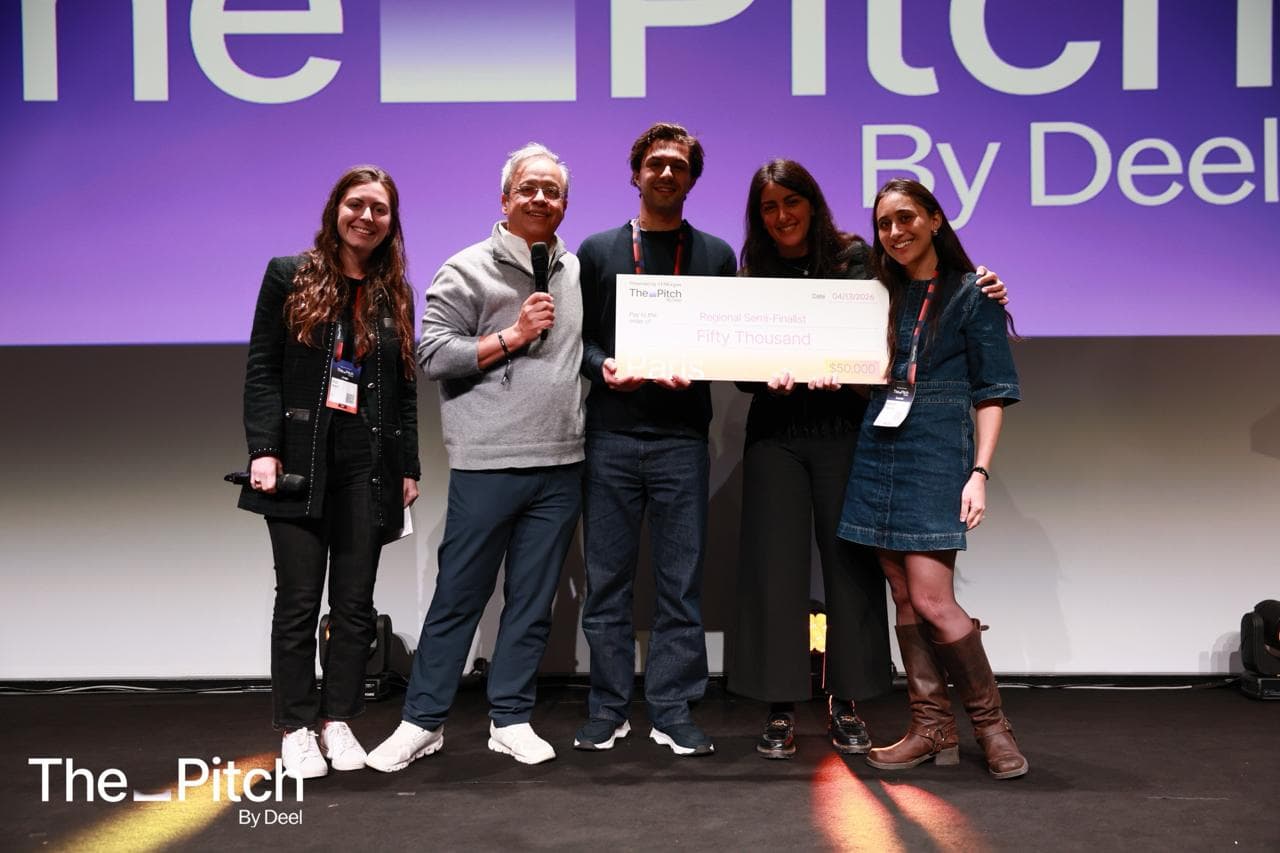
Company2026-04-17
Global Product Compliance in 2026: Why We Won the Pitch by Deel
Every physical product sold globally faces 100+ regulations across R&D, manufacturing, labelling, and customs. Here's how Cleo Labs is automating global product compliance with AI, and why Deel just picked us as their winner at Station F.
Naomie HaliouaAI2026-03-31
"Detective Work We Shouldn't Have to Do": Why Data Quality Is the Blind Spot of ML Compliance
A new research paper interviews EU-based data practitioners and exposes 5 systemic gaps between GDPR requirements and ML pipeline reality.
Naomie Halioua
Product Compliance2026-03-24
8 Products That Are Legal Here, Illegal There
Kinder Surprise, Red Bull, melatonin gummies: these everyday products are perfectly legal in one country and completely banned in another. Here's why, and what it means for brands selling internationally.
Anaelle Guez
AI2026-03-17
TRISM: Why Agentic AI Doesn't Have a Trust Problem; It Has an Architecture Problem
A landmark paper introduces TRISM, the first framework to separate trust, risk, and security in multi-agent AI systems. 66 citations in 3 months: here's why compliance teams should pay attention.
Alexandre BlochProduct Compliance2026-03-14
Cosmetic Regulation by Country: EU vs US vs Japan vs Brazil vs China
A cosmetic product sold globally must comply with completely different regulatory frameworks in each market. The EU bans over 1,600 ingredients; the US bans 11. Japan requires quasi-drug classification for anti-aging claims. China mandates animal testing for imported ordinary cosmetics. This guide maps the key differences across five major markets.
Anaelle GuezProduct Compliance2026-03-13
Digital Product Passport (DPP): What Retail Brands Need to Know
Starting in 2027, the EU will require Digital Product Passports for textiles, electronics, batteries and more: every product will need a QR code linking to a structured dataset on its composition, origin, repairability and end-of-life. Here's how retail brands should prepare under ESPR (Regulation 2024/1781).
Anaelle Guez
Product Compliance2026-03-12
Global Chemical Product Compliance: CAS Numbers, Formulations & Multi-Country Regulations
From CAS number screening to full formulation compliance across 106 countries: chemicals, packaging, labeling, and regulatory forecasting for South Africa, Mexico, EU, Brazil, China, India, and beyond.
Anaelle GuezCompliance2026-03-11
Multi-Market Product Compliance for Retail & Consumer Goods: The Definitive Guide
Launching a product across 106 countries? Map every regulation (ingredients, labeling, safety, packaging) with AI-powered compliance intelligence.
Anaelle Guez
AI2026-03-10
What If Someone Fed Your Compliance AI a Fake GDPR Text?
Most compliance AI assumes regulatory text is authentic. A new research paper introduces DEF, the first framework that detects falsified legal documents.
Naomie Halioua
AI2026-03-09
Multi-Agent AI for Compliance: What 2026 Research Says
Peer-reviewed 2026 studies confirm multi-agent AI can evaluate compliance across GDPR, AI Act, NIS2, and DORA: faster and more accurately.
Naomie HaliouaProduct Compliance2026-03-08
GPSR Compliance Guide for Consumer Goods Brands (2026)
The EU General Product Safety Regulation (GPSR, Regulation 2023/988) replaced the General Product Safety Directive on December 13, 2024. It applies to every non-food consumer product sold in the EU: from cosmetics to electronics to toys. Here is what brands need to do, with risk assessment, documentation and online-marketplace obligations.
Anaelle GuezCompliance2026-03-06
Product Compliance in the EU: The Complete Guide for Tech Companies
Product compliance is the fastest-growing challenge for EU tech companies. This guide covers every framework from CE marking to AI Act.
Anaelle Guez
Compliance2026-03-05
Regulatory Compliance in France: A Complete Guide for Tech Companies
From CNIL enforcement to Sapin II and the Duty of Vigilance law, here's everything tech companies need to know about regulatory compliance in France.
Anaelle Guez
Compliance2026-03-04
CSRD 2026: The Real Challenges of Sustainability Reporting for Large Groups
Beyond the directive itself, CSRD compliance is a massive data aggregation challenge. Here are the concrete problems large companies face.
Anaelle GuezCompliance2026-03-03
Product Compliance vs. Corporate Compliance: What's the Difference and Why It Matters
Most companies confuse product compliance with corporate compliance. The distinction matters, especially in the EU, where product-specific regulations are multiplying faster than ever.
Anaelle Guez
Compliance2026-03-02
GDPR Enforcement by Country: Fines and Trends in 2026
A data-driven breakdown of how GDPR enforcement varies across EU member states. Compare fines, enforcement patterns, and DPA priorities in 2026.
Anaelle Guez
Compliance2026-03-01
NIS2 Compliance Guide: What Every EU Business Must Know
NIS2 dramatically expands cybersecurity obligations across the EU. This guide covers who's in scope, what's required, the penalties for non-compliance, and how to prepare.
Alexandre BlochCompliance2026-02-28
UK Post-Brexit Compliance: What EU Companies Must Know in 2026
The UK regulatory landscape has diverged from the EU since Brexit. From UK GDPR to FCA Consumer Duty, here's what European companies need to track.
Anaelle Guez
FinTech2026-02-27
The Compliance IT Stack in 2026: Why Fintechs Need Regulatory Intelligence, Not More GRC Tools
GRC platforms were built for 5 regulations. Fintechs face 50+. Here's why compliance IT teams are switching to AI-powered regulatory intelligence.
Alexandre Bloch
Compliance2026-02-26
Brazil's LGPD vs GDPR: Key Differences for Compliance Teams
Operating in both Brazil and the EU? Here's a practical comparison of LGPD and GDPR covering legal bases, DPO requirements, data transfers, and penalties.
Anaelle GuezFinTech2026-02-25
Product Compliance Checklist: Launching a Fintech Product Across the EU
Launching a fintech in the EU means navigating PSD2, MiCA, DORA, AML6, GDPR, and the AI Act. This checklist covers every regulatory step.
Anaelle Guez
Compliance2026-02-24
EU AI Act Compliance Guide 2026: What You Need to Know Now
With high-risk AI system requirements taking effect in August 2026, compliance teams have months, not years, to prepare. A practical guide to AI Act obligations, timelines, and how to build readiness.
Anaelle Guez
Compliance2026-02-23
DORA Compliance Deadline Tracker: Key Dates and Action Items for 2026
DORA is fully applicable, but many financial entities are still catching up. A practical tracker of every key deadline, requirement, and action item for ICT risk management compliance in 2026.
Anaelle Guez
AI2026-02-22
Agentic AI for Regulatory Compliance: Why the Future of Compliance Is Autonomous
Regulatory complexity is outpacing compliance teams. Agentic AI (systems that reason, plan, and act autonomously) is the only viable response.
Naomie Halioua
Compliance2026-02-21
The Real Cost of Non-Compliance in the EU: 2026 Data
From GDPR's €5B+ in cumulative fines to AI Act penalties of 7% of global revenue, the cost of non-compliance in the EU has never been higher. Here are the numbers that matter.
Anaelle GuezAI2026-02-20
The Compliance Officer's Guide to AI Tools in 2026
AI tools for compliance are proliferating. But which ones actually deliver? A research-backed guide to evaluating AI compliance platforms, from regulatory monitoring to due diligence.
Naomie Halioua
AI2026-02-19
How AI Is Transforming Compliance Monitoring in 2026
From keyword alerts to contextual intelligence: how AI-powered monitoring systems are replacing manual regulatory watch and giving compliance teams a decisive edge.
Naomie Halioua
AI2026-02-18
RegTech Market 2026: The Definitive Landscape Guide
The RegTech market is projected to reach $42B by 2026. This landscape guide maps the key players, emerging categories, and the shift from reactive GRC to proactive regulatory intelligence.
Naomie Halioua
AI2026-02-17
How Multi-Agent AI Scores Regulatory Risk: Inside Cleo's Pipeline
A deep dive into the multi-agent AI architecture behind Cleo's regulatory risk scoring, from the 5-stage pipeline to the 30+ specialized agents that achieve 98.5% accuracy.
Naomie Halioua
Compliance2026-02-16
Cybersecurity Compliance for Tech Companies in the EU: NIS2, DORA and Beyond
NIS2 and DORA are rewriting the rules for cybersecurity compliance in the EU. For tech companies, this means new obligations for incident reporting, risk management, and supply chain security.
Alexandre BlochCompliance2026-02-15
Regulatory Intelligence in 2026: 5 Trends Compliance Leaders Can't Ignore
From the EU AI Act enforcement wave to cross-border data transfer upheaval, here are the five regulatory trends shaping compliance strategy this year.
Naomie Halioua
AI2026-02-13
Building Explainable AI for Compliance: Why Transparency Is Non-Negotiable
Regulators demand that AI-driven compliance decisions be auditable and explainable. Black-box models create risk even when they perform well. Here's how to build AI that regulators trust.
Naomie Halioua
Compliance2026-02-12
Automating Third-Party Due Diligence: From 5 Days to 2 Hours
Manual third-party screening is slow, expensive, and error-prone. AI-powered due diligence collapses weeks of work into hours, with better coverage and full auditability.
Anaelle Guez
Compliance2026-02-11
GDPR in 2026: Beyond the Compliance Checklist
Eight years after GDPR, enforcement has matured. Here's what compliance teams need to know about the regulation's new reality in 2026.
Anaelle Guez