
What actually changes on 31 July
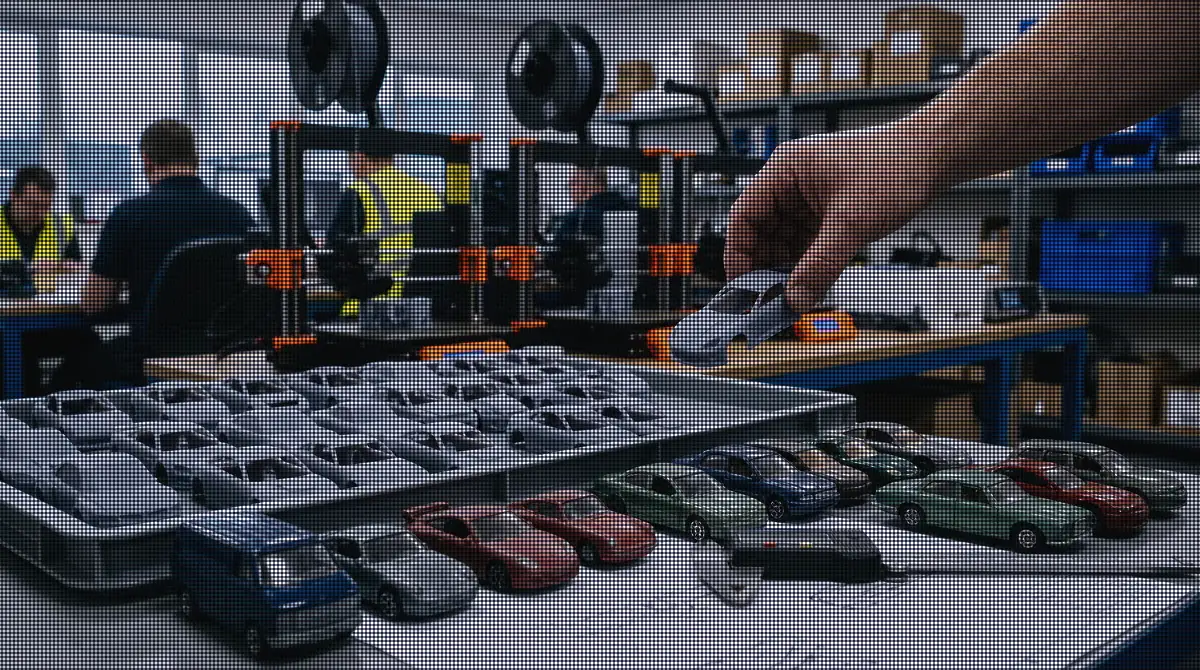
Directive (EU) 2024/1799 was adopted on 13 June 2024 and entered into force on 30 July 2024, giving member states until 31 July 2026 to transpose it into national law and start applying it. It covers products already carrying repairability requirements under existing EU ecodesign rules: Annex II lists household washing machines and washer-dryers, dishwashers, tumble dryers, refrigerating appliances, electronic displays, welding equipment, vacuum cleaners, servers and data storage products, mobile phones, cordless phones and slate tablets, plus goods incorporating batteries for light means of transport such as e-bikes and e-scooters. Within that scope, manufacturers must repair a defective product at a reasonable price and within a reasonable time, including after the legal guarantee period has expired, and must supply spare parts and repair tools at a reasonable price to any repairer, professional or consumer. They are barred from using contractual terms or hardware and software techniques that block the use of compatible, second-hand or 3D-printed spare parts, provided those parts meet safety rules and don't infringe IP. A consumer who chooses repair over replacement during the legal guarantee period gets a 12-month extension of that guarantee. Before agreeing to a repair, a consumer can request a standardised European Repair Information Form, free of charge, quoting price, timeframe and terms, valid for 30 calendar days by default.
Three nuances that separate signal from noise
01
It's a directive, not a regulation, so 31 July is 27 deadlines, not one
A regulation would apply identically the moment the clock strikes. A directive only sets the outcome; each of the 27 member states had to pass its own implementing statute, and those texts are not identical: they can go beyond the EU minimum on penalties, scope and procedure.
02
Even an early mover finished five weeks out
Germany is one of the member states usually cited as ahead of schedule, yet its Bundestag only passed the Reparaturgesetz on 26 June 2026: five weeks before application. Brands assuming the national rulebooks were long settled by the time this deadline landed are working from an outdated picture.
03
Penalties are a national choice, not an EU-wide figure
The directive only requires that penalties be "effective, proportionate and dissuasive" and leaves the actual amounts and enforcement mechanics to each member state, so the real cost of getting this wrong varies by which of the 27 national laws applies to a given sale.
13 Jun 2024
The European Parliament and Council adopt Directive (EU) 2024/1799 on common rules promoting the repair of goods.
30 Jul 2024
The directive enters into force, starting the 25-month clock for national transposition.
20 May 2026
Germany's Bundestag holds the first reading of its implementing bill and refers it to committee.
26 Jun 2026
Germany's Bundestag passes the Reparaturgesetz, its implementing law.
31 Jul 2026
Transposition deadline: the directive must be applied under national law in all 27 member states.
The numbers behind the directive
One number is the EU-wide guarantee every covered product now carries. One is how many separate national laws deliver that guarantee. One is how close to the deadline even a well-prepared member state finished its text.
12 months
the warranty extension a consumer gets when they choose repair over replacement during the legal guarantee period, on any covered product
27
the number of separate national implementing laws that deliver the same directive, because it is a directive, not a directly applicable regulation
5 weeks
the gap between Germany's Bundestag passing its implementing law (26 June 2026) and the EU-wide application date (31 July 2026)
The real subject: one obligation, 27 compliance texts
A regulation is directly applicable law the moment its date arrives: the same words, in every member state, at the same time. A directive sets a result member states must achieve and leaves the drafting to them, which is exactly what happened here: the European Commission set the products in scope, the core obligations and the outcome (repair at a reasonable price, spare-parts access, the 12-month warranty extension), and each of the 27 national parliaments wrote its own statute to deliver it, on its own domestic timetable, with its own penalty schedule. That is why Germany's Bundestag was still in first reading on 20 May 2026 and only passed its Reparaturgesetz on 26 June: a member state widely cited as an early mover, finishing barely a month before the deadline the Commission set two years earlier. Read 31 July as 'the EU's right-to-repair law starts,' and the date looks like a single, uniform switch flipping across the bloc. Read it as 'the deadline by which 27 governments each had to finish their own transposing statute,' and the operative fact for a brand selling a covered product across the EU is that it doesn't answer to one repair law on 31 July: it answers to whichever of 27 national laws applies to a given sale, each potentially setting its own penalty amounts, its own registration or repairer-platform requirements, and its own procedural detail on top of the same EU floor.
Why it matters for brands
Any brand selling household appliances, electronic displays, servers, mobile phones, tablets or light-transport batteries into the EU is in scope from 31 July, regardless of where it is headquartered: the obligation attaches to the product and the sale, not to the seller's nationality. The immediate task is not reformulating a product; it is mapping, market by market, which of the 27 transposing statutes governs a given sale, what penalty regime it carries, whether it imposes national registration, repairer-platform or disclosure requirements beyond the EU floor, and confirming that spare-parts pricing, repair-time commitments and the European Repair Information Form are ready wherever the product ships. Brands that manage repairability data (spare-parts catalogues, repair-time commitments, applicable national obligations) as structured, per-SKU, per-market records can answer that question for every product line at once. Brands that manage it as a single EU-wide policy document risk discovering, market by market, that 'EU compliant' was never one answer to begin with, and that the national text that actually governs a given sale was only finalised weeks before it started applying.
Two ways to read 31 July
The narrow read
The EU's Right to Repair Directive kicks in: appliance and electronics brands now owe EU consumers a repair option and a 12-month warranty extension, uniformly, across the bloc.
The structural read
Because it's a directive, the product scope and the 12-month extension are the only genuinely EU-wide facts: the penalties, procedures and repairer-platform requirements a brand actually faces are set in 27 separate national statutes, at least one of which (Germany's) was only finalised five weeks before the deadline it must now meet.
Frequently asked questions
What is the EU Right to Repair Directive and when does it apply?
Which products are covered by the directive?
Why does it matter that this is a directive rather than a regulation?
Sources
- EUR-Lex: Directive (EU) 2024/1799 of the European Parliament and of the Council of 13 June 2024 on common rules promoting the repair of goods
- EUR-Lex, Summary: Common rules promoting the repair of goods and amending related EU legislation
- European Commission: Directive on repair of goods
- European Commission, Right to repair: Questions and Answers
- Council of the European Union: Right to repair products
- European Parliament, Right to repair: making repair easier and more appealing to consumers
- Newsworm, Bundestag Passes Right to Repair Law: A Win for German Consumers (26 June 2026)
- Freshfields, Repair instead of replace: Germany moves to implement the EU Right to Repair Directive