Toys in the EU: the evidence to collect before market placement
Placing a toy on the EU market requires a safety assessment, a conformity-assessment procedure, technical documentation and CE marking. Testing and warnings must match the toy’s use, intended age and materials. An isolated supplier report does not establish compliance of the product being sold.
The product and market in scope
A product intended for children’s play, sold in the EU. Start with classification and intended age; childcare products, sports equipment and decorative items do not automatically follow the same rules.
Classification and safety assessment
Describe foreseeable use and assess mechanical, physical, chemical, flammability and, where relevant, electrical aspects. Age grading must be supported by product characteristics; a warning does not replace appropriate design.
Standards and assessment route
Identify relevant harmonised standards and check what the reports actually cover. The assessment route depends in part on their coverage and application; in some cases, a notified body must perform a type examination.
Sources: European Commission · Toy safety and transition ↗ · European Commission · Harmonised standards for toys ↗
Documentation, CE and information
Link evidence to the model being sold, draw up the declaration and check CE marking, identification, operator details and warnings in the required languages. Radio or electrical functions also require examination of additional legislation.
Documents to collect
- Description, justified age grading, photographs, bill of materials and materials.
- Safety assessment and reports covering the variants being sold.
- Technical documentation and signed declaration of conformity.
- Labels, warnings, instructions and batch traceability.
Which documents should you request from a supplier? ↗
Who assesses conformity?
The manufacturer is responsible for conformity. Not every toy needs a notified body: involvement depends on the assessment route. A laboratory tests within its scope; a notified body intervenes where the procedure requires it.
Developments to monitor
The new Toy Safety Regulation has been adopted with a transition before general application. Distinguish that future regime, including the digital passport, from the Directive framework still governing market placement during the transition. Also track harmonised-standard references.
A worked example
Fictional worked example.
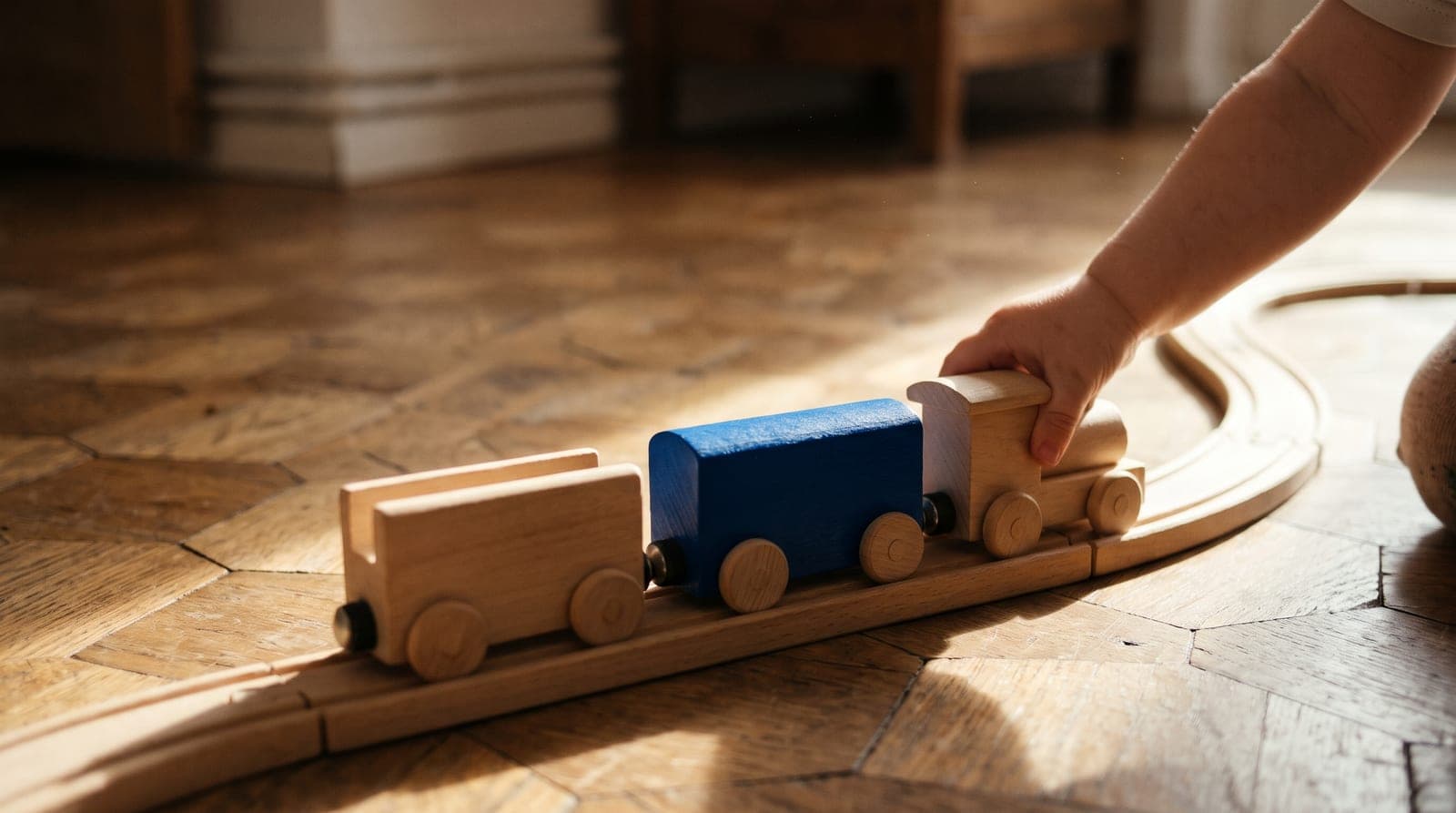
A wooden train gains a new paint finish and an extra magnet. Review the changed materials, magnet retention and play scenarios. A report for the version without the magnet does not automatically cover the updated toy.
How Cleo can help
A product compliance assessment scopes the requirements and evidence for your product. Product monitoring then tracks the changes that affect it.
Have my product assessed ↗ · Explore product monitoring ↗
Official sources
- European Commission · Toy safety and transition ↗
- European Commission · Harmonised standards for toys ↗
Sources consulted on 5 November 2026. Product configuration, your business role and destination countries determine the assessment needed.
Frequently asked questions
Which products does this article cover?
- A product intended for children’s play, sold in the EU. Start with classification and intended age; childcare products, sports equipment and decorative items do not automatically follow the same rules.
Who is involved in the conformity assessment?
- The manufacturer is responsible for conformity. Not every toy needs a notified body: involvement depends on the assessment route. A laboratory tests within its scope; a notified body intervenes where the procedure requires it.
Related resources
What documents should an EU importer request from a supplier?
A practical supplier document request for EU consumer products, with checks for model identity, declarations, test evidence and traceability.read ↗